
Young Hare 1502 by Albrecht Durer Reproduction Print FREE Etsy
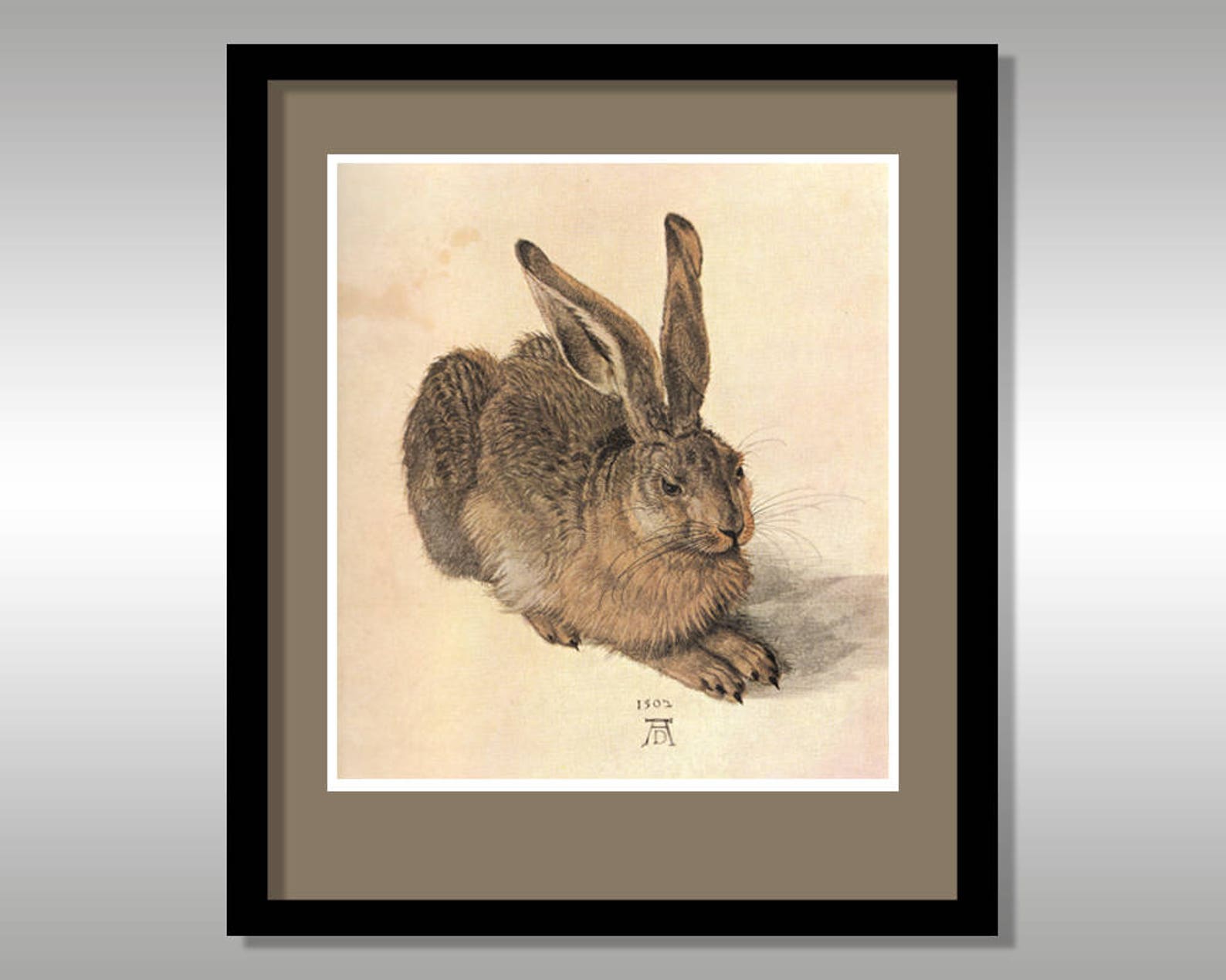
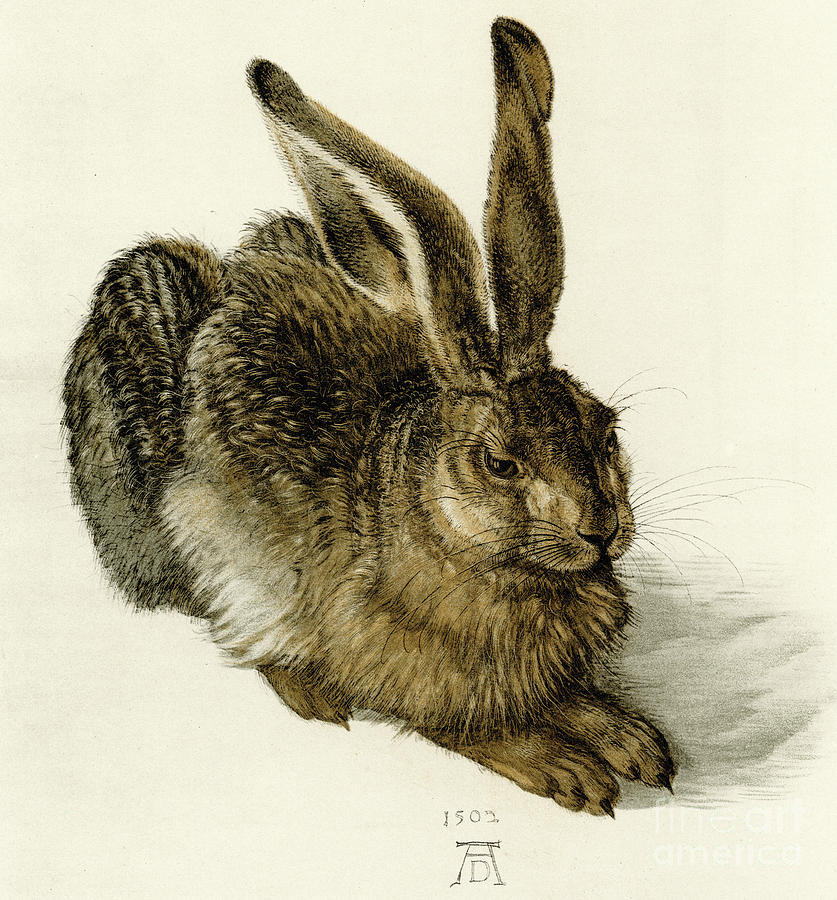
Young Hare was created by Albrecht Dürer, a German artist. Completed in Durer's workshop in 1502, it has been widely acknowledged as an observational art masterpiece. While often given the English title of The Young Hare, the subject itself has actually been identified as mature.The German title Feldhase literally translates to Field Hare, a more apt title.
A Young Hare Renaissance art, Animal art, Albrecht durer

Young Hare, a watercolor and body color work from 1502 painted by Albrecht Dürer, is one of the most recognized and beloved works in the history of art. It is not a still life, nor is it a depiction of a dead animal as seen in many other works from that era. Dürer stepped away from the traditional Renaissance genres and created an.
Albrecht Durer Young Hare 1502 Albertina Vienna 24" x 22" Fine Art Giclee Canvas
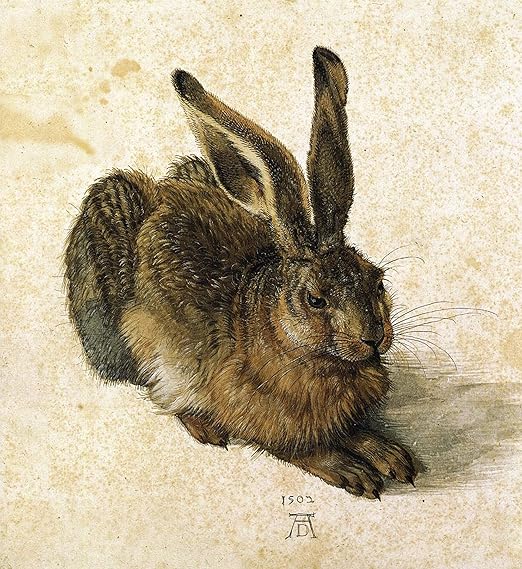
Young Hare (German: Feldhase) is a 1502 watercolour and bodycolour painting by German artist Albrecht Dürer.Painted in 1502 in his workshop, it is acknowledged as a masterpiece of observational art alongside his Great Piece of Turf from the following year. The subject is rendered with almost photographic accuracy, and although the piece is normally given the title Young Hare, the portrait is.
Albrecht Dureryoung Hare 1500s Rabbits Bunny Animal Art Etsy
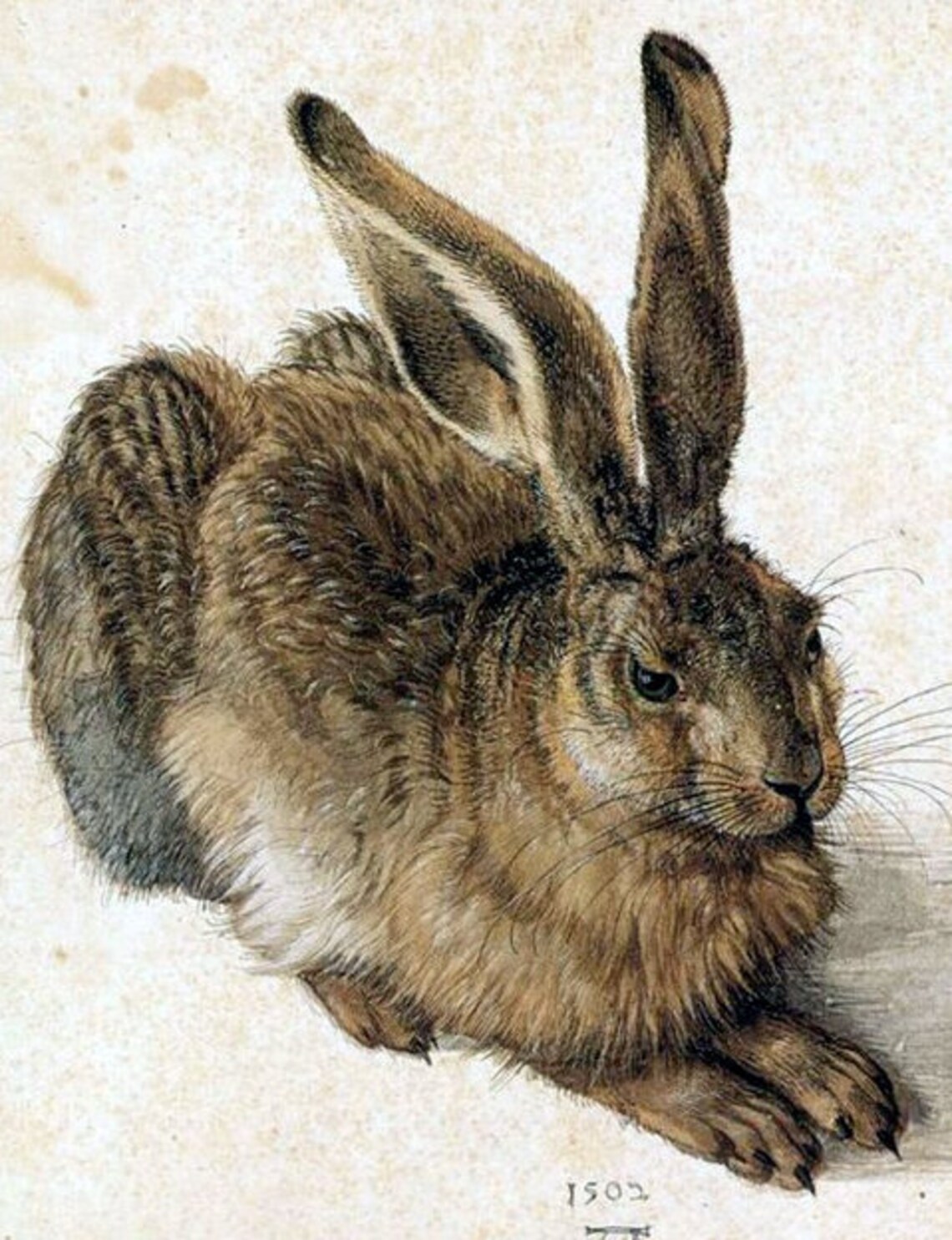
Young Hare - Albrecht Dürer (1502); one of Dürer's most famous works - scholars have pondered how he managed to pose the animal. The reverberating gleam in the hare's right eye.
Albrecht Dürer The painter with 'a magical touch' BBC Culture

Young Hare by Albrecht Dürer, the renowned German artist, is a watercolor painting originally produced in 1502.Dürer's rabbit painting is regarded as a masterwork of observational art. The subject is depicted nearly photographically realistic, and while the painting is generally titled Young Hare by Albrecht Dürer, the image is realistic enough for the hare to be confirmed as a mature.
Young Hare by Albrecht Dürer galleryIntell

Young Hare (German: Feldhase) is a 1502 watercolour and bodycolour painting by German artist Albrecht Dürer.Painted in 1502 in his workshop, it is acknowledged as a masterpiece of observational art alongside his Great Piece of Turf from the following year. The subject is rendered with almost photographic accuracy, and although the piece is normally given the title Young Hare, the portrait is.
"Young Hare" (1502), Albrecht Dürer Albrecht durer, História da arte, Arte renascentista

Albrecht Dürer's painting, The Young Hare, created in 1502, is recognized as a masterpiece of observational art and a crucial nature study. The painting is highly detailed and portrays a young hare in a semi-rested position with its hind legs tucked under its stomach. What stands out the most is the fine lines used in the fur, along with.
Young Hare by Albrecht Durer, Renaissance Fine Art Poster Zazzle.ca
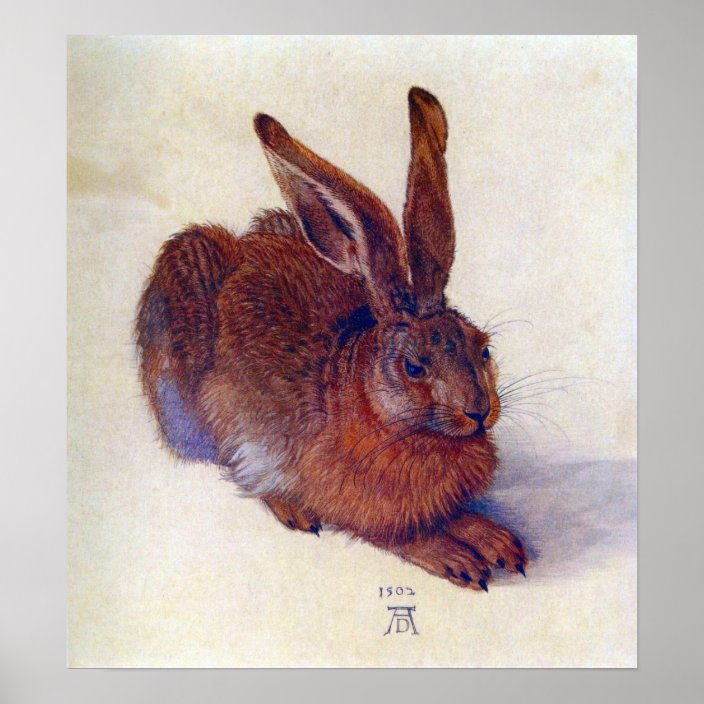
Added: 27 Mar, 2024. Inspired by a true story, Invincible recounts the last 48 hours in the life of Marc-Antoine Bernier, a 14-year-old boy on a desperate quest for freedom. 'Young Hare' was created in 1502 by Albrecht Durer in Northern Renaissance style. Find more prominent pieces of animal painting at Wikiart.org - best visual art database.
Dürer Young Hare Glass art Albrecht durer, Animal art, Renaissance art

Spectacular Presentation of a Renaissance Genius . It has been decades since so many works by Albrecht Dürer (1471-1528) have been seen in one place: thanks to valuable international loans, Vienna's ALBERTINA Museum - itself home to numerous world-famous icons of drawing by Dürer including the Hare, Praying Hands, and Large Piece of Turf - will be presenting over 200 examples of.
Albrecht Dürer The painter with 'a magical touch' BBC Culture
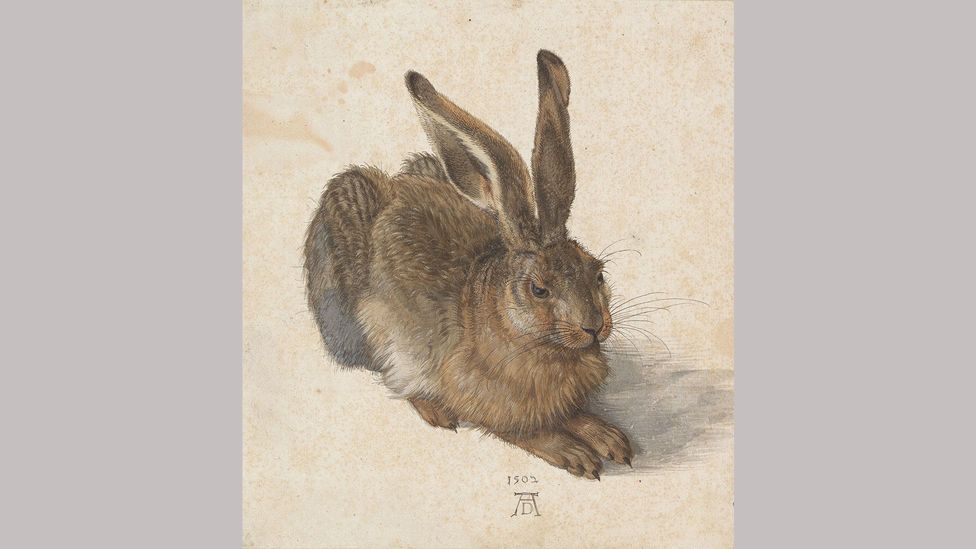
Klaus Albrecht Schröder, director of the Albertina, gives a detailed explanation about the world-famous water-colour painting YOUNG HARE, drawn by Albrecht D.
Young Hare 1502 by Albrecht Durer Reproduction Print FREE Etsy
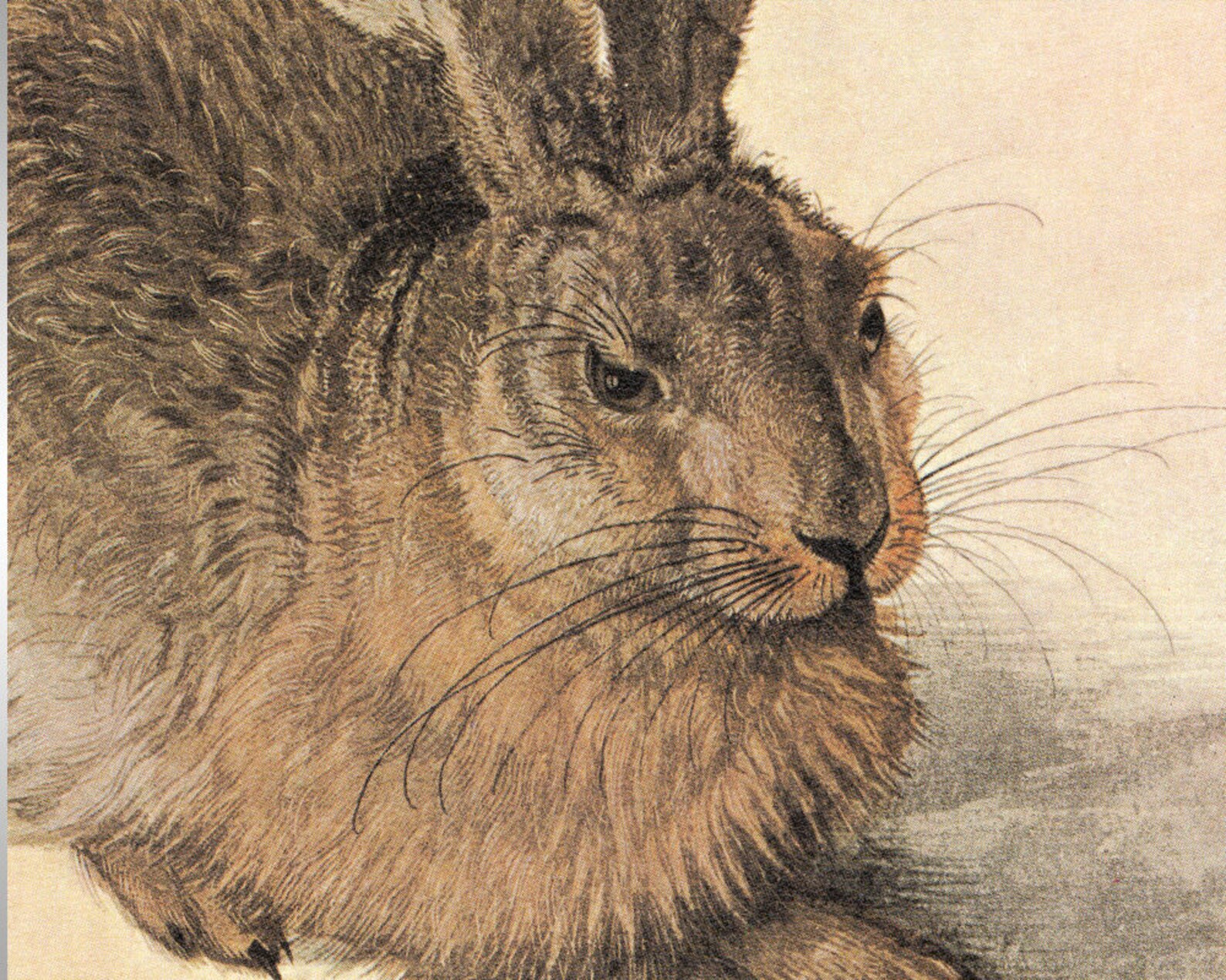
Hans Hoffmann's (1530—1591) "Durer's Fake Hare" is dated 1528, the year of Durer's death. This is not the only variation of the work by this artist. In 1588, Dürer's drawing entered the collection of Emperor Rudolf II, in 1783 it appeared in the court library. Later it became the property of Duke Albert of Saxe-Teschen and.
Albrecht Dürer (Austrian 14711528) A Young Hare [detail] Hare art, Albrecht durer, Albrecht

Young Hare by Albrecht. Dürer. Albrecht Dürer's Hare is a major work of the German Renaissance. This watercolor, made in 1502, shows a hare sitting on its hind legs, facing left. It measures 25.1 x 22.6 cm and is now kept in the Albertina Museum in Vienna. The Hare by Albrecht Dürer, 1502, white and watercolor on paper.
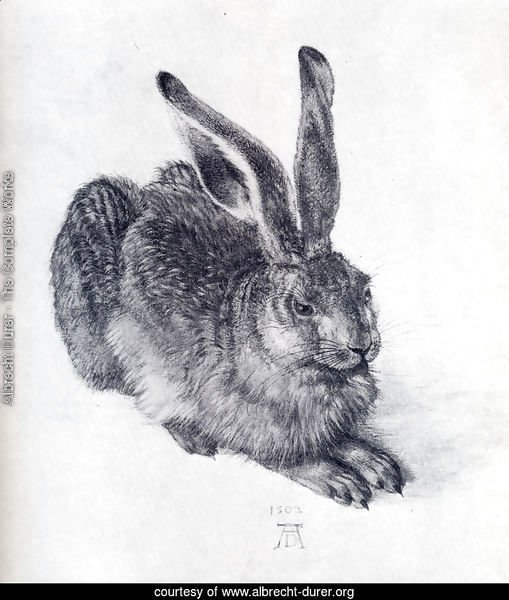
Albrecht Durer The Complete Works Young Hare
Albrecht Durer. Technique: Young Hare is a mix of watercolor and bodycolor (also known as gouache) that was created on paper in 1502. It's believed that he produced the piece in his workshop as there is a reflection of the window frame in the subject's eye but this may simply be down to the technique that Durer used.
Young Hare 1502 by Albrecht Durer Reproduction Print FREE Etsy
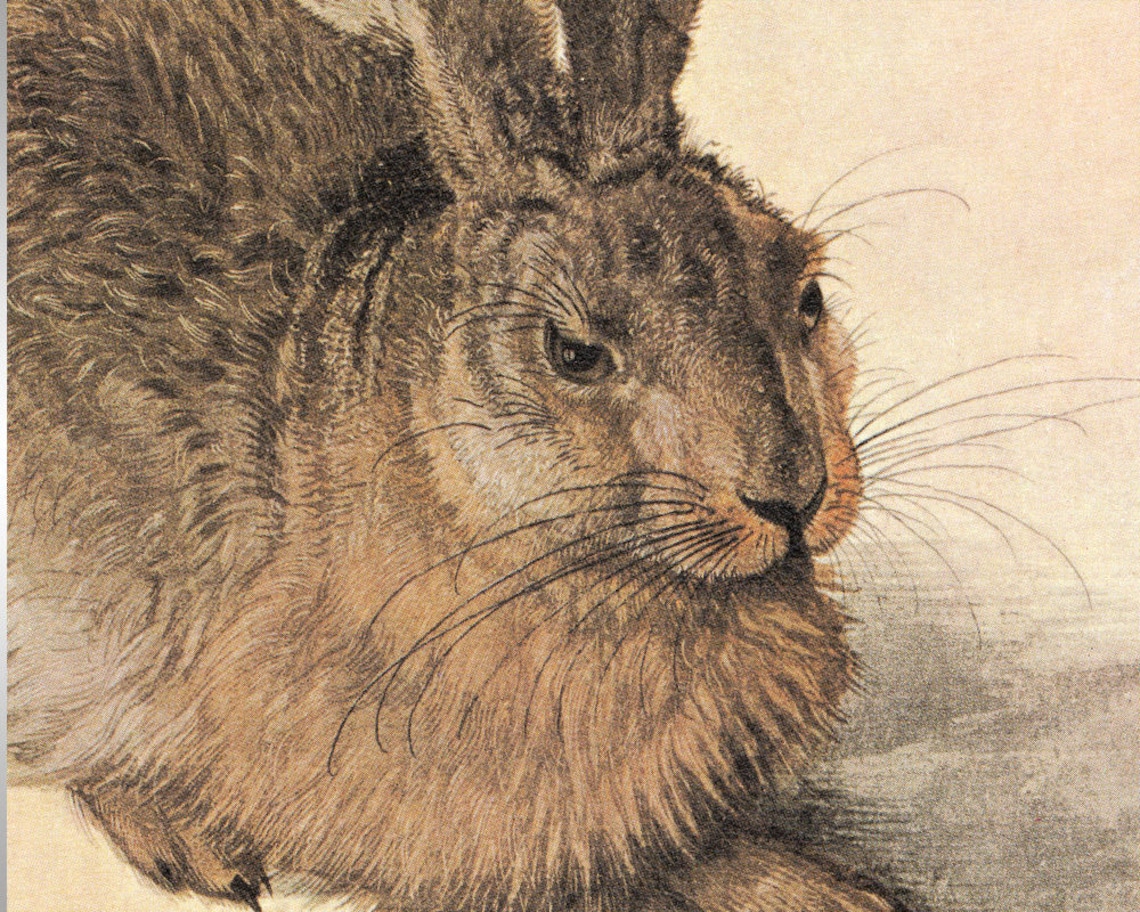
Email: tomgurney1@gmail.com / Phone: +44 7429 011000. This study of a wild hare is surely one of Albrecht Dürer's most popular works. For many people who like and admire it, it may be the first of Dürer's masterpieces that they ever encounter, or the first time they connect a work with his name. It has appeared in world encyclopaedias of.
Young Hare by Albrecht Dürer Animal art, Albrecht dürer, Albrecht durer

Self-portrait (1500) by Albrecht Dürer; Albrecht Dürer, Public domain, via Wikimedia Commons. Young Hare (1502) by Albrecht Dürer in Context. German artist Albrecht Dürer's most recognizable artwork, Young Hare, was also known as Feldhase.The German title directly translates in English to "field hare", which is commonly recognized as wild hare in English.
Albrecht Durer Young Hare Original Artists
Childhood. Dürer was born in the city of Nuremberg on May 21st 1471 to Albrecht and Barbara Dürer. He was the third child of the family, who would go on to have at least 14, and possibly as many as 18 children. His father, a successful goldsmith, had moved to Nuremberg from Ajtós near Gyula in Hungary in 1455.