
Red spider lily lycoris radiata cluster amaryllis higanbana flow Photograph by Alex Grichenko
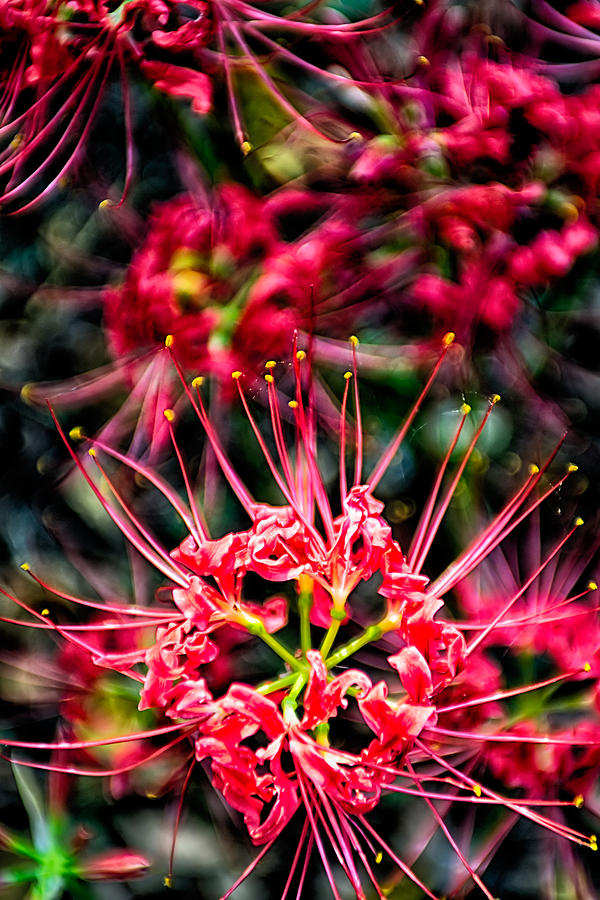
Red spider lily is an heirloom bulb that is easily passed from hand to hand. Replant offsets as the leaves die in spring. -Parker Andes, Fine Gardening #147 (October 2012), page 71. Noteworthy Characteristics Brilliant red flowers. Propagation Replant offsets in spring, as the leaves die. Problems The blooms fade quickly in high heat.
Red Spider Lily (Lycoris) Facts, Meaning and Symbolism A to Z Flowers
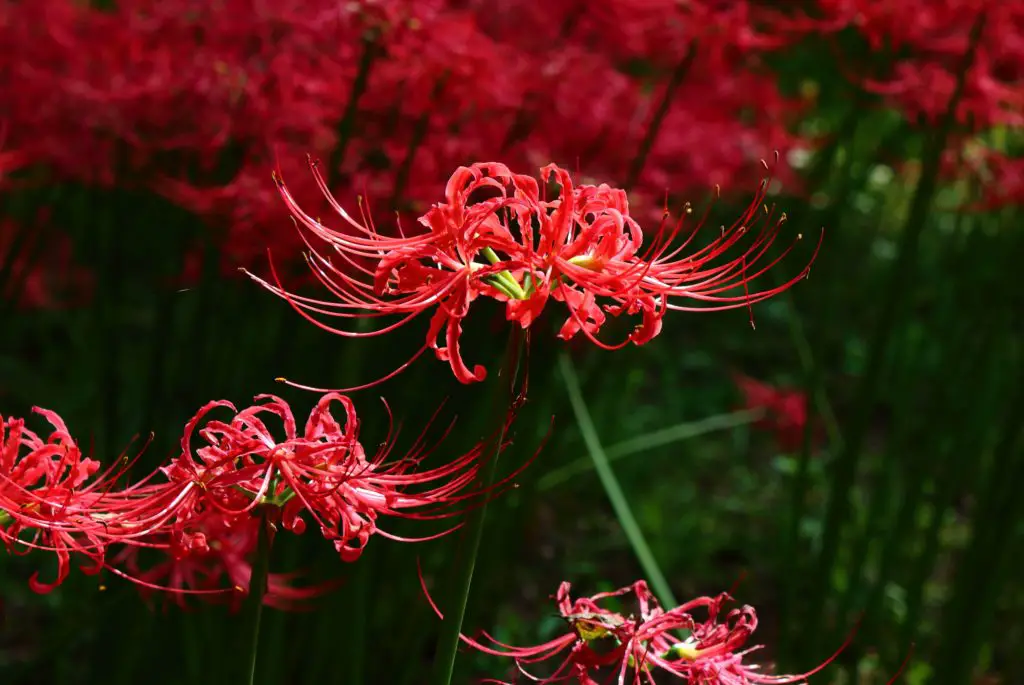
The Red Spider Lily, scientifically known as Lycoris radiata, is a captivating flower that not only boasts stunning coral red blooms but also emits a delicate and sweet fragrance. This late-summer bloomer, thriving in zones 5-10, is a favorite for many garden enthusiasts due to its unique beauty and the added sensory delight of its fragrant nature.
Red Lycoris Radiata Red Surprise Lily Red Magic Lily Red Spider Lily Easy To Grow Bulbs

Lycoris radiata, known as the red spider lily, red magic lily, corpse flower, or equinox flower, is a plant in the amaryllis family, Amaryllidaceae, subfamily Amaryllidoideae. [3] It is originally from China, Japan, Korea and Nepal [1] and spread from there to the United States and elsewhere. It is considered naturalized in Seychelles and in.
Lycoris radiata (Red Spider Lily) K. van Bourgondien

Perfect for the late summer garden, Lycoris radiata (Red Spider Lily) is a bulbous perennial boasting eye-catching umbels of 4-6 brilliant coral-red flowers with a golden sheen, adorned with elegantly curled petals and exceptionally long stamens. Blooming in late summer to early fall, the blossoms appear on naked stems. The foliage of strap-shaped, dark green leaves with a hint of blue.
Red Lycoris Radiata Red Surprise Lily Red Magic Lily Red Spider Lily Easy To Grow Bulbs

Plant the bulbs at about 3 to 5 inches (7.5 to 12.5 cm) deep. Space then at 5 to 8 inches (12.5 to 20 cm) apart. Planting in groups greatly enhances their visual impact. Once established, Red Spider Lily requires minimal care. Water moderately during the growing season. Reduce watering after leaves have died back.
Red spider lily lycoris radiata cluster amaryllis higanbana flow Photograph by Alex Grichenko

The red spider lily or lycoris radiata, is a bulbous perennial flower that is known for its stunning coral red clustered flowers with a golden sheen that are enveloped by long red stamens. The red spider lily is known by a number of names, including red magic lily, red surprise lily, hurricane lily, hell flower or equinox flower..
Red spider lily lycoris radiata cluster amaryllis higanbana Stock Photo Alamy
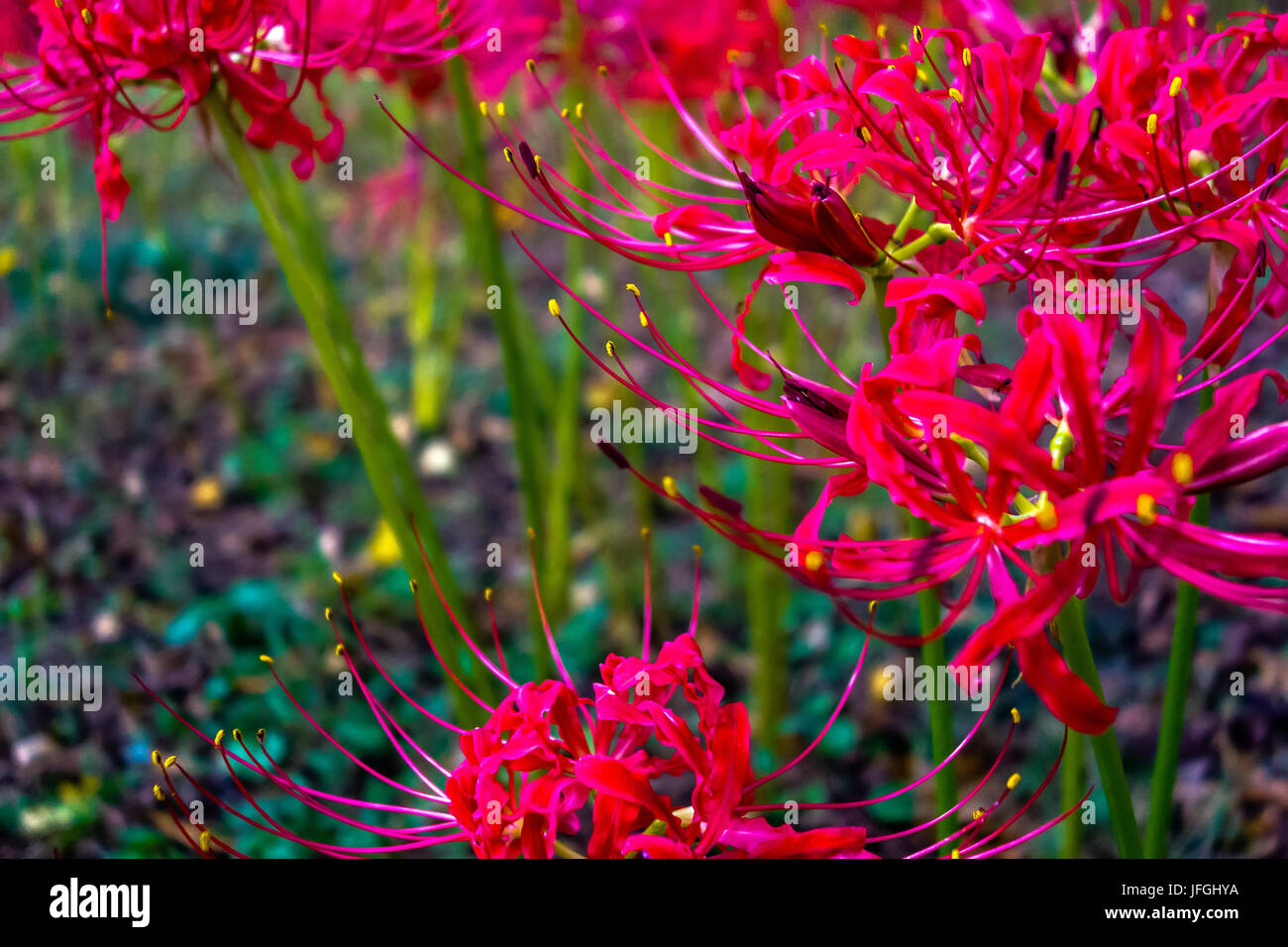
The spider lily is one of these plants. When summer begins to fade, the showy, red flowers begin to appear across gardens and even lawns in the south. The red spider lily grows from round short-necked bulbs that are approximately 1 1/2 inch thick. It is part of the amaryllis family. They are cousin to the daffodil, Lycoris flower in the fall.
Lycoris radiata (Red Spider Lily) Bulb Jackson & Perkins

Red spider lily (Lycoris radiata): This plant features bright red blooms. Electric blue spider lily (Lycoris sprengeri): This species has pink flowers with blue streaking. Resurrection lily (Lycoris squamigera): The leaves of this species grow in the spring, die back in the summer, and then are followed by the flowers.
Red spider lily lycoris radiata cluster amaryllis higanbana flow Photograph by Alex Grichenko

Description. Red Spider Lily, also known as Lycoris radiate, is a late-summer bloomer that thrives in zones 5-10. It is deer resistant and fragrant, making it a must have in the garden and cut for unique summer bouquets.
Red Lycoris Radiata Red Surprise Lily Red Magic Lily Red Spider Lily Easy To Grow Bulbs

Moderate moisture during the growing season is essential for your lycoris radiata. When it is dormant during the summer months, the drier soil conditions will protect the bulb from rot conditions that can happen in warm soil. Overwatering is still a concern. As the red spider lily puts down deep roots, it has access to a lot of deeper water.
LYCORIS RADIATA RED SPIDER LILY Stock Photo Alamy
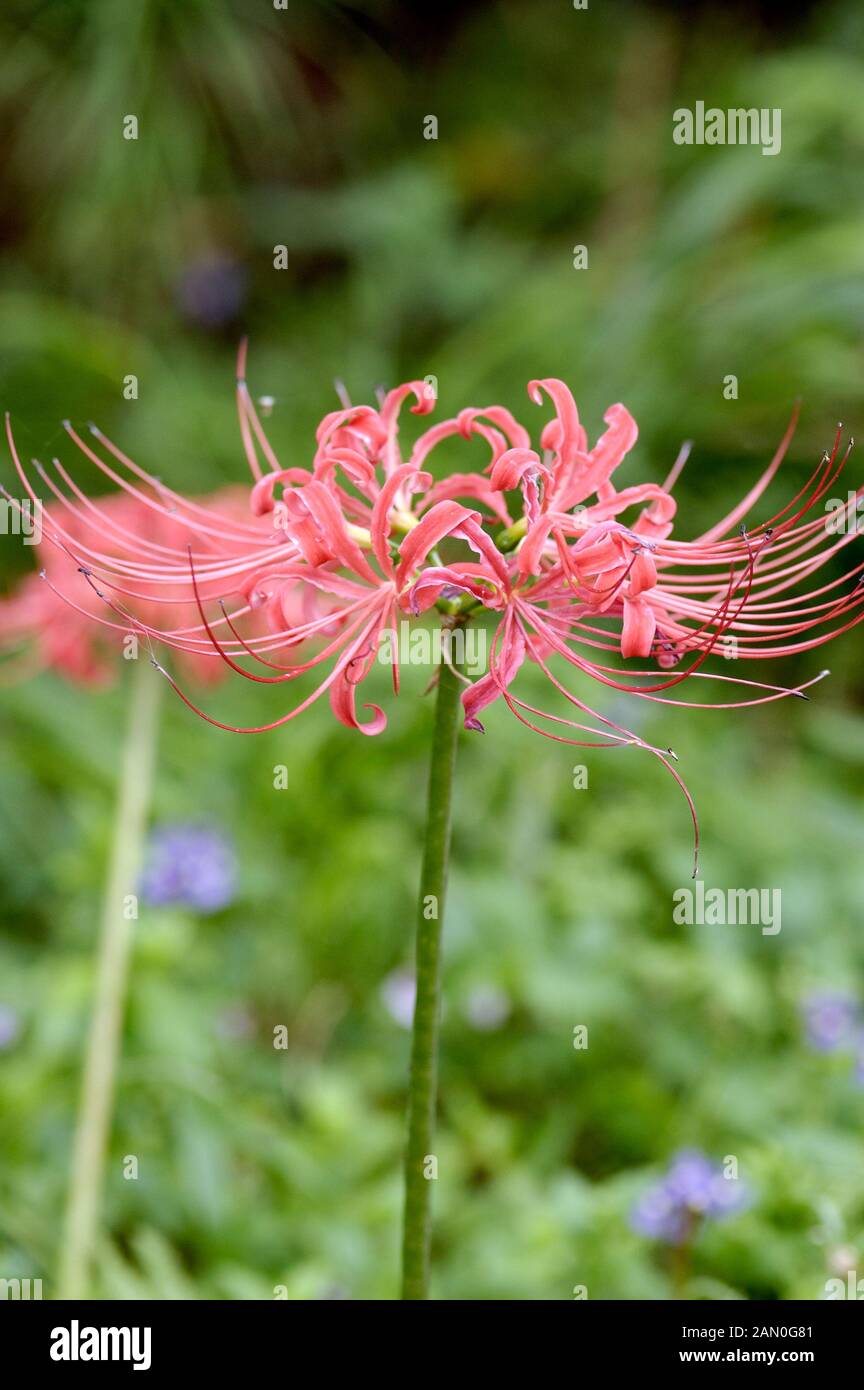
Lycoris radiata. red spider lily. A bulbous perennial producing umbels of 4-6 bright red, late-summer flowers with wavy-margined, reflexed petals and conspicuous anthers. Strap-shaped, dark green, semi-erect leaves appear after flowering and persist through the winter into early spring.
Red spider lily (Lycoris radiata), Isehara City, Kanagawa Prefecture, Japan Stock Photo Alamy
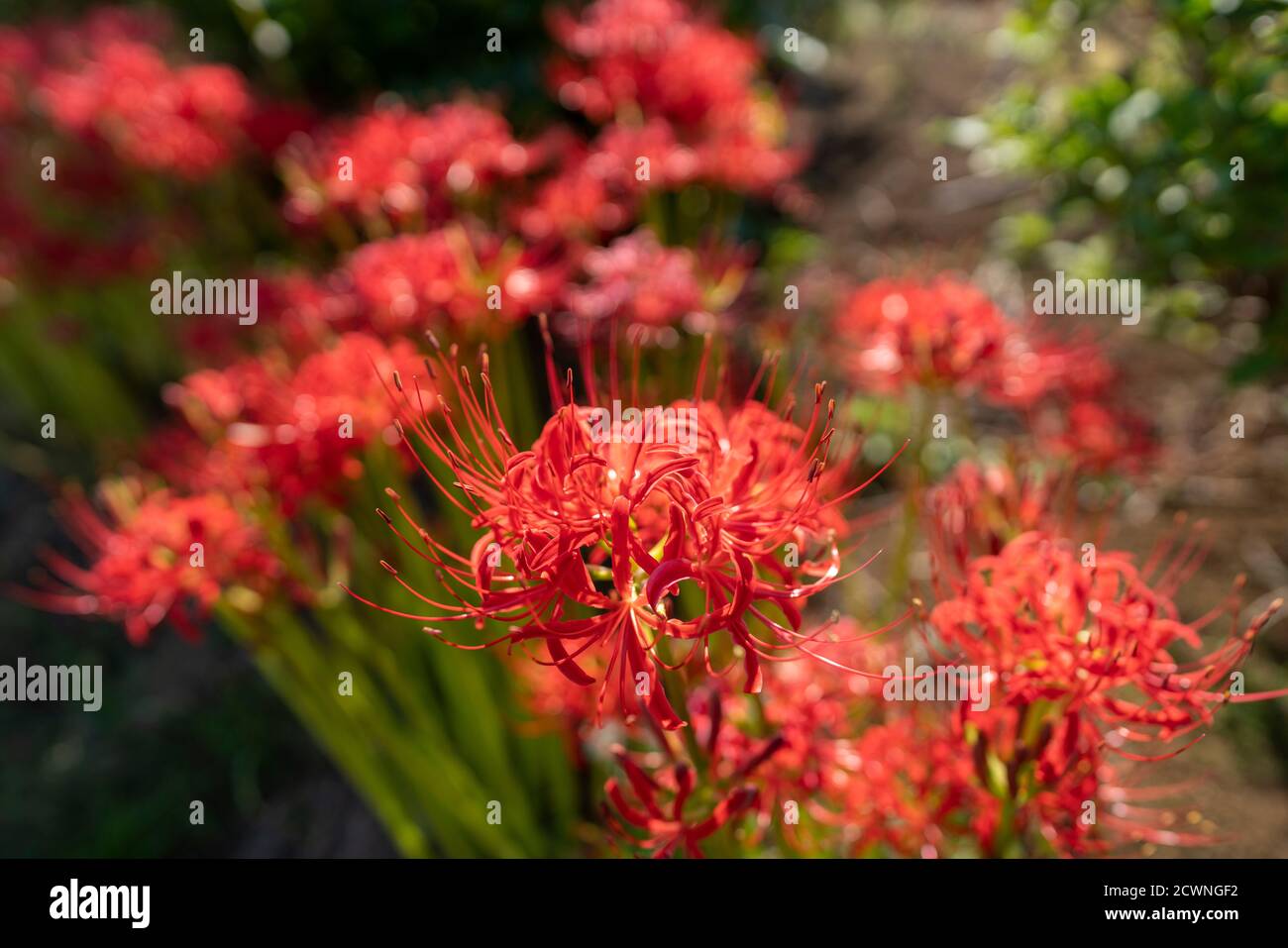
Red spider lily (Lycoris radiata) blooms in late summer and early fall. It is care-free and naturalizes quickly. Red spider lily (Lycoris radiata) blooms in late summer and early fall.. Red spider lily is reliably hardy in zones 6 to 10, but in zones 6 and 7 it is best to protect the leaves and exposed bulbs from winter freezes with a layer.
Red spider lily (Lycoris radiata), Isehara City, Kanagawa Prefecture, Japan Stock Photo Alamy
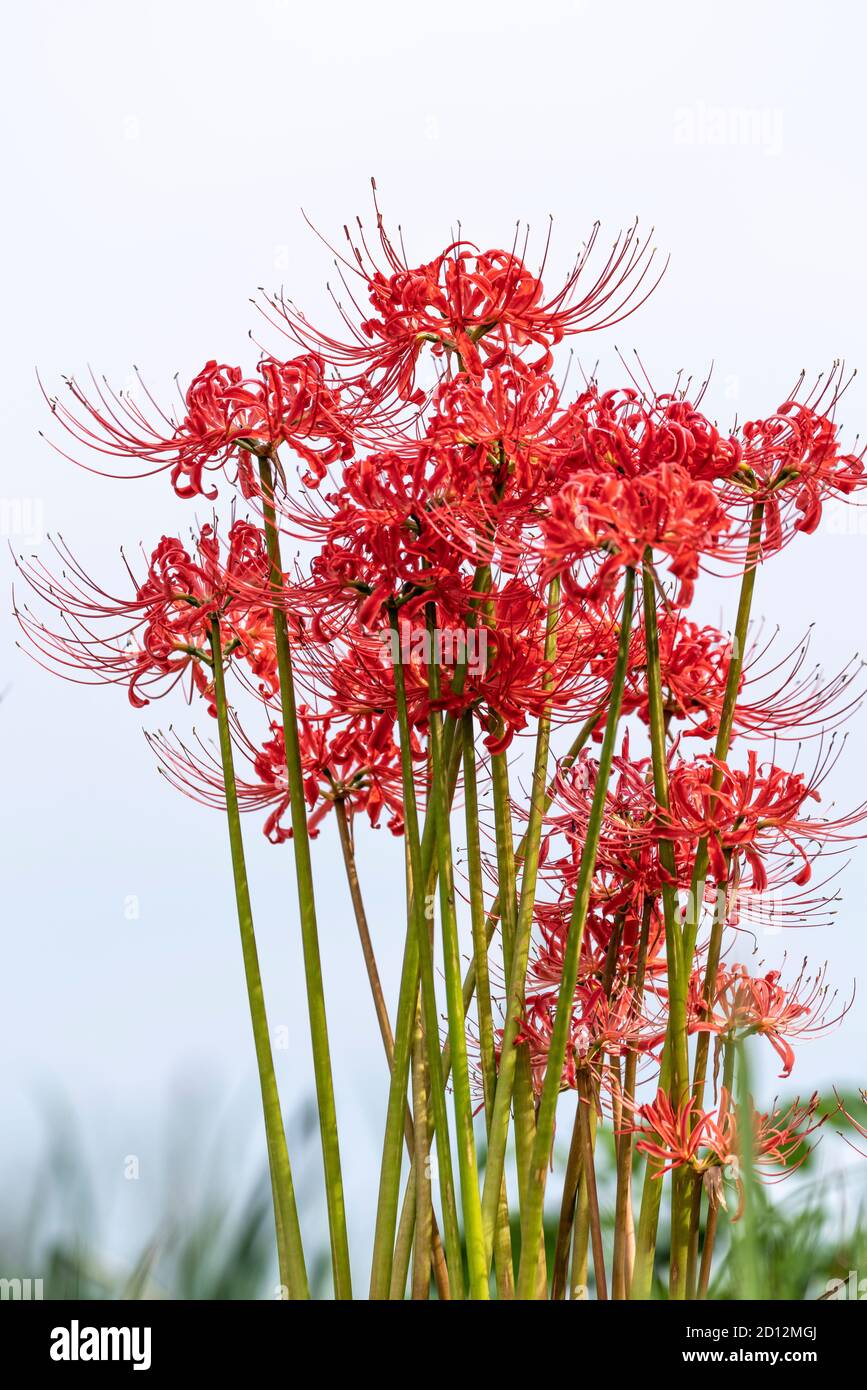
The red spider lily is a cultivated, late summer blooming perennial bulb in the amaryllis family (Amaryllidaceae). It is native to China, Japan, Korea and Nepal and is usually found in shady, moist areas along slopes and rocky areas near stream banks. The genus name Lycoris is in honor of
Lycoris radiata Red Spider Lily

Red Spider Lily (Lycoris radiata) is the classic passalong plant of heirloom gardens in the South and Midwest. It grows umbrels of four to six coral-red flowers festooned with extremely long stamens that curl upward. Magical looking flowers grow to 24 inches tall. In tropical climates, red spider lilies put out foliage in the fall and bloom all.
Lycoris radiata (Red Spider Lily) K. van Bourgondien
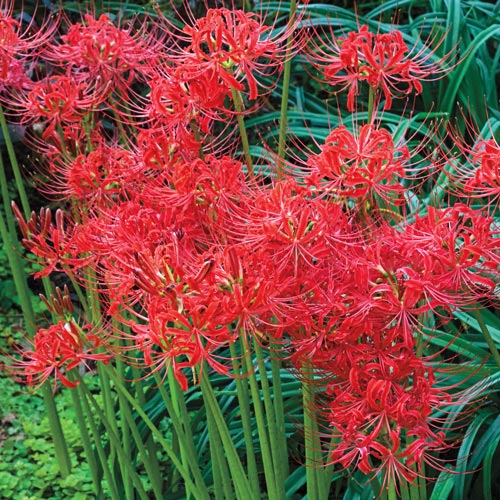
Aim to have your lily bulbs in the ground at least four weeks before the last frost in early spring. These heirloom Lycoris radiata, red spider lilies, bulbs are tough and hardy. We are proud to sell Southern perennial bulbs. Our focus is to provide bulbs that will do excellent for the warm climate gardener.
Red Spider Lily Wallpapers Top Free Red Spider Lily Backgrounds WallpaperAccess
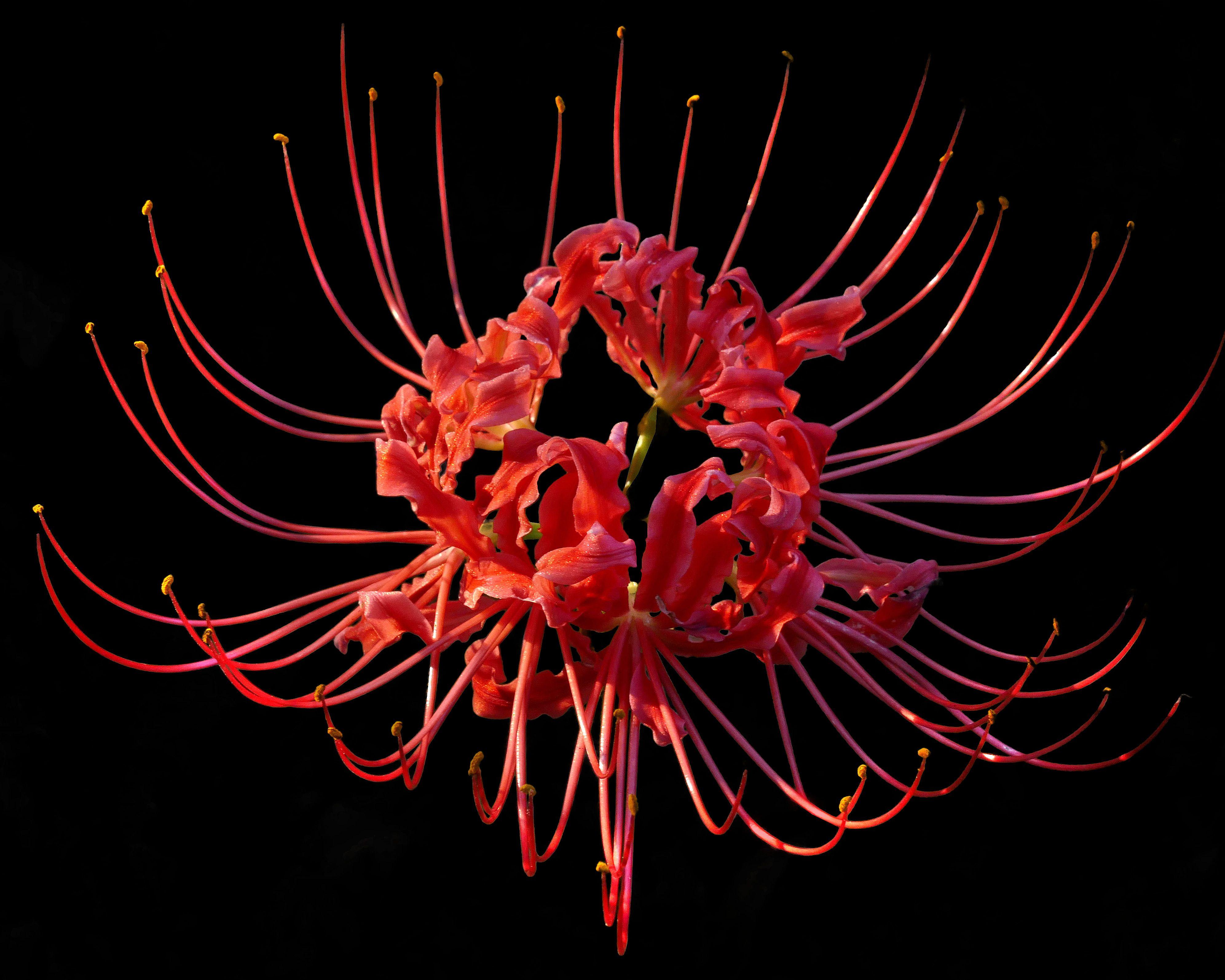
Red Spider Lily Care Tips. Origin: China. Height: Up to 24 in (60 cm) Light: Bright light. Give the plant a quarter turn every few days to ensure all sides receive sunlight for even growth. Water: Water thoroughly while plant is growing and blooming. Use a pot with a drainage hole and empty drainage tray because these bulbs may rot if kept wet.